
Before your copy loads or your logo finishes rendering, the decision’s already made. Design drives 94% of first impressions, and a poor layout sends 38% of visitors packing, all in less than one-twentieth of a second.
That’s the power of design psychology: the art and science of shaping perception through color, spacing, and composition. Every shade, line, and margin tells a story. Blue whispers reliability. Red sparks urgency. Balanced layouts feel professional; cluttered ones feel cheap. The human mind is wired to seek harmony and meaning in what it sees, and brands that understand these cues can turn casual browsers into loyal buyers.
At Exatech Design, we believe design is extremely important. It’s how people feel about your brand, and whether or not they remember, like, trust, and buy from you. By the end of this article, you’ll understand how we use color and layout to build trust, guide emotion, and influence action to increase revenue and make brands unforgettable.
Need help getting your website’s design to convert? Click the button below for a free consultation!
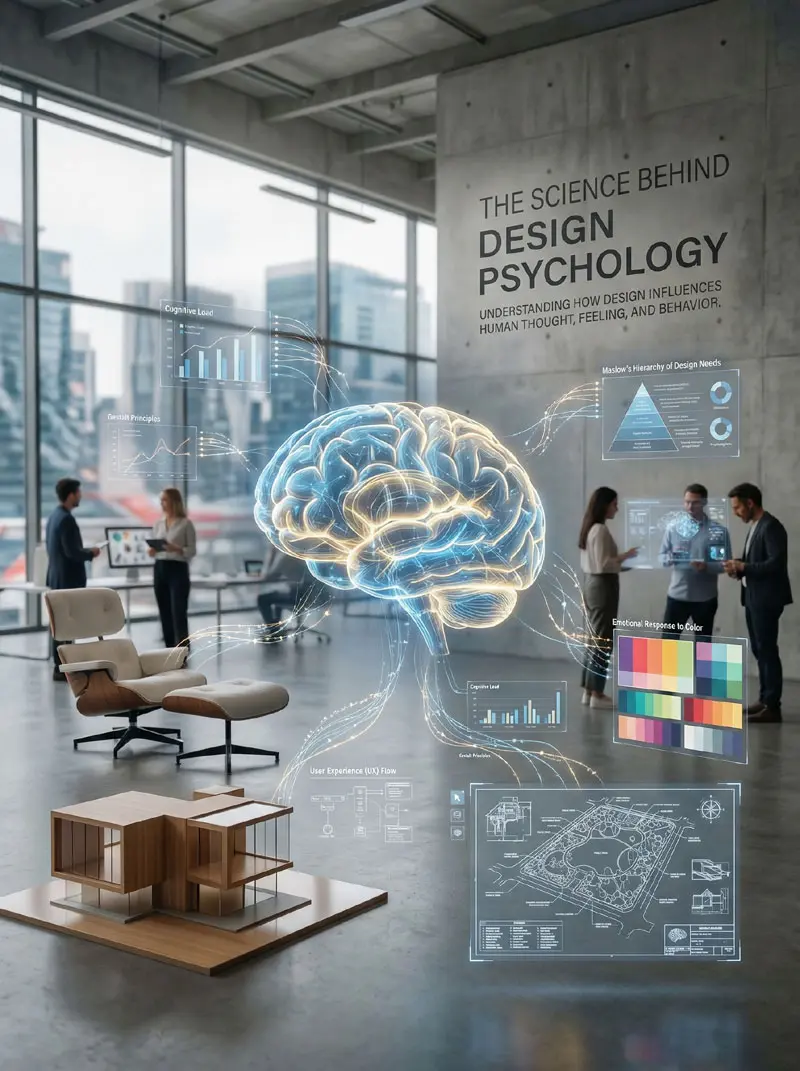
The Science Behind Design Psychology
Design psychology sits at the crossroads of cognitive science and visual strategy. It’s how designers use proven psychological principles to create digital experiences that feel right to readers. They do this by aligning with how the human brain naturally processes information.
When you visit a website, your brain instantly organizes what it sees using Gestalt principles; proximity, balance, contrast, and closure. These subconscious rules help people decide what’s important, where to look next, and whether a brand feels credible.
Color, meanwhile, works on a deeper emotional level. Warm tones evoke energy and excitement; cool tones inspire trust and calm. Strategic layout, whitespace, hierarchy, and alignment, all reinforce that emotional message by guiding the eye with ease and intention.
In digital marketing, trust is formed visually before it’s earned verbally. A cohesive color palette and balanced layout can communicate authority faster than any headline can.
There really is science and data that tells us the psychology behind how consumers react to colors, designs and even page structure. User behavior is one of the most important things to be aware of when designing
The Power of Color in Buyer Decision-Making
Color is extremely important in web design. The shades your brand uses affect how customers feel, think, and act. In fact, studies show color can increase brand recognition by up to 80% and influence up to 90% of snap purchase decisions. Whether it’s a fiery red “Buy Now” button or a soothing blue homepage banner, every hue tells your audience something about who you are and what they can expect.
Effective color design connects logic to feeling, converting attention into trust, and trust into action. At Exatech Design, we use color psychology to turn visuals into value, helping brands create an emotional atmosphere that drives both connection and conversion.
Layout and Visual Hierarchy: Guiding the Eye to Action
By now, we’ve established that color sparks emotion. but layout directs user behavior. The structure of your design determines what users notice first, what they skip, and where they click. A clear visual hierarchy helps visitors process information effortlessly and take the action you want, whether it’s filling out a form or making a purchase.
Good designers think like psychologists: every margin, font size, and placement cues the brain to assign importance. Strategic layout creates flow. leading the eye from curiosity to clarity to conversion.
The F-Pattern and Z-Pattern of Scanning
Eye-tracking studies show that users rarely read every word on a webpage. Instead, they scan in recognizable patterns:
- The F-Pattern (common in blogs and text-heavy pages): Users read the top headline, skim down the left side, and occasionally glance horizontally across the page. This pattern emphasizes the top and left zones as prime real estate for headlines, key info, and CTAs.
- The Z-Pattern (common in landing pages and product pages): Users’ eyes follow a “Z” path: left to right across the top, diagonally down, then left to right again at the bottom. Smart designers place logos and navigation at the top, imagery and key messaging in the center, and the CTA in the bottom-right zone to align with this natural flow.
By understanding these visual habits, brands can position elements where attention already goes — not where they hope it will.
White Space, Contrast, and Balance
Great design breathes. White space (or negative space) is the pause at just the right moment that gives your content power. It helps users focus, reduces mental strain, and highlights the elements that matter most. When every inch is packed with text or graphics, nothing stands out. But when contrast and spacing are used intentionally, bold headlines paired with clean backgrounds, generous padding around CTAs, and consistent alignment, the result is visual calm and instant clarity.
See what I did with this section? This is only text, but the contrast and extra white space gets attention without adding any special elements like borders or shadows.
Ready to Turn Design Psychology into Sales Results?
Remember, design psychology isn’t an abstract theory. Not when it’s directly affecting your revenue. Emotion drives attention. Clarity drives trust. Together, and with the right copy, they drive sales.
The right colors in just the right places can improve brand recognition by up to 80%. It’s your designer’s job to make sure your brand stands out and demands attention.
At Exatech Media, we apply these principles across everything we design, from logo redesigns and brand strategy to complete web UX overhauls. Our goal is simple: we build brands that people love and trust.
Click the button below to schedule your free design consultation now!